Showing posts with label punch-out hole. Show all posts

Tuesday, August 21, 2007

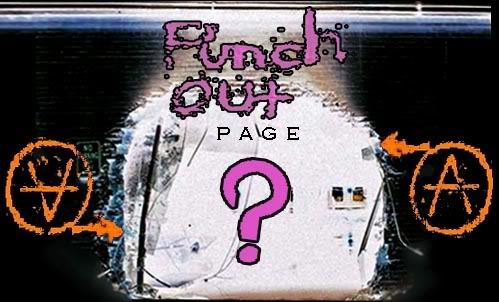
PUNCH-OUT PAGE {Masterlist}


PUNCH-OUT PAGE {Masterlist}
Adam Larson/Caustic Logic
The Frustrating Fraud
Last updated July 16 2007


It’s long past time I worked out a study of the much-discussed but little-explained “punch-out” hole at the end of the plane’s trajectory through the Pentagon. The official story maintains that the disintegrating 757 plowed in a northeasterly direction clear through the E, D, and C rings of the building, the furthest-reaching elements from the fuselage coming to rest just outside the inside wall of the final ring, and into the open, ground-level service roadway past that – the A-E Drive that runs around the building between C and B rings. Burning debris was ejected with enough force to leave marks on the outer B ring wall, but otherwise stopped in the drive.
Russell Pickering of Pentagonresearch.com, who has studied the issue more than perhaps anyone else, aptly describes this exist wound as “one of the most anomalous features of the Pentagon attack […] absolutely inexplicable in terms of the composite nose of a Boeing 757-200 "punching out" through it," given "curiously little" of any plane parts outside of it. [1] It’s a perfect hole implying strong, evenly applies force and yet no ready sign of just what part of the plane made this and then - apparently - vanished before hitting the next wall.
Here is the earliest photo Pickering could locate of the hole, before any marking were spray-painted and before the debris inside was pulled forward. Note the ground is strewn with scattered bricks and flooded with water from firefighting efforts. [2] Compare this with with the damage to ring B's wall across from it [below], separated only by fifty feet of air; not a brick removed. [3]
Only a few photos of the exit hole have been released, many had seen it, and none have explained it with any useful precision. It has proven a magnet for mystery-mongers and skeptics from across the credibility spectrum.

How exactly the plane's trajectory wound up giving us what we’ve seen is left a bit vague in the official record.
- official "explanations:" confusion/silence over the exact cause of the hole.

- Analysis of the plane debris at and near the site.

- Carlson's backhoe punch-out theory assessed for errors

- Possibility of a purposeful, explosive punch-in

Personally I cannot venture a solid guess as to what happened here. The hole was either cut out with explosives for some reason or somehow caused by the barreling 757, perhaps via debris that was removed before the pictures we’ve seen were taken. I’m certainly open to suggestions. But I have to agree that IF there is a physical crime – an inside job element to the Pentagon attack that can be shown with evidence - this is the most likely spot to look.
---
Sources:
[1] Pickering, Russell. “Exit Hole” Pentagon Research. http://www.pentagonresearch.com/exit.html
[2]. [3] Photo Source: Pentagon Research. Exit Hole Chronology. http://www.pentagonresearch.com/062.html

Monday, August 6, 2007

PUNCH-OUT HOLE “EXPLAINED” BY OFFICIAL ACCOUNTS

PUNCH-OUT HOLE “EXPLAINED” BY OFFICIAL ACCOUNTS
Adam Larson / Caustic Logic
The Frustrating Fraud
July 22 2007
Last updated/edited July 25


Official Dodginess:
How exactly Flight 77's trajectory through the building wound up giving us the exit hole we’ve seen is left a bit vague in the official record. The American Society of Civil Engineers' Pentagon Building Performance Report shows a photo of the hole but gives no adequate explanation. Its terse summary: "there was a hole in the east wall of Ring C, emerging into AE Drive, between column lines 5 and 7 in Wedge 2. The wall failure was approximately 310 ft from where the fuselage of the aircraft entered the west wall of the building," [1] The Arlington County After Action Report noted “the damage extended all the way through the inner wall of the C Ring, a distance of approximately 285 feet,” and showed a photo of the hole captioned “penetration through the inner wall of the Pentagon’s C Ring.” [2] An account of FEMA Urban Search and Rescue shoring/bracing of the building is the most detailed of these three reports. It explains that "a nine foot diameter exit hole was created in the wall of C ring and the remainder of the debris from the impact ended up in the alley between C ring and B ring known as A & E Drive," and elsewhere shows a photo of the "'exit wound' where the plane debris exited the C ring." [3]

These three reports, a few early press conferences, published eyewitness accounts, and a handful of photos constitutes the body of evidence on this hole. While it’s been widely seen and commented on, it has not yet been explained with any useful precision, and contradictory theories dominate to an unsettling degree.

Impact Energy Waves?
In October 2004, the National Geographic Channel program Seconds from Disaster proposed a novel theory by which shockwave pressure from the impact cause the punch-out hole. By this model, plane debris and heavy, exploding jet fuel, perhaps along with explosions of things in the building, gave off shockwaves that reverberated and crossed through the building’s first floor. Having no other exit point, these somehow directed themselves and whatever was in front of them to focus on that precise spot, punching the neat 9x11’ hole we’ve seen. [4] While this explains both the improvised exit and the lack of any major evident airplane parts, the official story has generally maintained it was physically caused by the plane, or some part of it, though which part has been widely contested.

Engine?
Military District of Washington’s news service reported two weeks after the attack, mentioning that “an aircraft engine punched the hole out […] on the inside wall of the second ring of the Pentagon." [5] Though the quote has been widely republished, no other official sources support this claim. No debris seen there looks like engine debris.The piece’s author got the “second ring” part wrong (whether one counts A-E or E-A, C is the third ring), so maybe identifying an engine was an error as well.

Fuselage/Nosecone?
As widely noted, Pentagon renovation spokesman Lee Evey explained implausibly during a September 15 press conference “the nose of the plane just barely broke through the inside of the C ring, so it was extending into A-E Drive a little bit. So that's the extent of penetration of the aircraft." [6] As Killtown wondered “how could the fragile nose of Flight 77 penetrate all the way through 3 reinforced concrete/steel hardened rings and punched out a hole through the inside wall of Ring C and leave no evidence of itself outside the punch-out hole?” [7] This seems unlikely, even given that the “hardened” walls from impact to exit really totaled only 22” of unreinforced brick and limestone [link forthcoming], but spanned between by about fifty damaged support columns and only one plane fuselage to absorb the other end of these blows.

What survived this was not precisely the nose cone, but more likely some element(s) of the nosecone assembly – landing gear, landing gear door, cockpit panel or cargo door – some tattered portion of the forward fuselage. As Jim Hoffman explained, in such an impact, “only the parts of the aircraft with the greatest density and total mass, such as the lower third of the fuselage, could be expected to penetrate far into the building. That part also has a small frontal profile - approximately the size of the punch-out hole.” [8] Of course there is no piece of debris anywhere near the size of the hole seen in any of the available photos, but the illustration is helpful. The fuselage had a lot of mass, tens of tons, and though it was under great stress, it didn’t simply disappear on impact.

Landing Gear?
It stands to reason that as the plane disintegrated, the densest parts of aircraft wound up at the deepest point of penetration. For example, the flight data recorder from the tail end of the plane was reportedly found just inside the punch-out hole. [9] The heavier elements from the front end would also come to rest around this point. The book Debunking 9/11 Myths identified the landing gear. The book cited Paul F. Mlakar, ASCE team leader and lead author of the Performance Report, who “saw the landing gear with his own eyes” during his early onsite inspections, for its explanation that:

“The hole was not made by an engine or the nose of Flight 77 pushing through the building’s interior - or a missile - but by the crashing jet’s landing gear, which was ejected beyond the bulk of the wreckage. […] As one of the heaviest and most dense parts of the plane, the landing gear flew farther than any other item in the wreckage and was responsible for puncturing the wall in Ring C.” [10]

Other photos and accounts seem to back this up by recalling or even showing a wheel, a tire, and even a massive landing gear strut, near the hole. But there are some serious problems with this theory as well, like the ASCE’s own Performance Report not identifying this alleged hole-puncher as such, which noted that "the landing gear" (all three sets?) were in fact found inside the building, hardly the best place to be after exiting through the hole into the AE Drive. [13] These questions will be summarized more fully in a [separate post].

ASCE and FBI Secrecy
Mlakar's ASCE study team “went to great lengths of detail down to individual columns” in the plane’s path, Russell Pickering noted, providing their own photos and personal damage assessment of nearly all of them. Yet they danced around the cause of the punch-out, as Pickering wrote, offering “not a single explanation for the exit hole.” [14] The three columns nearest the breeched wall - 1N-North, 3N-North, and 5N-North - remained un-photographed and listed in the report as “damaged per FBI.” [15] Pickering suspects falsification of the status of these three columns to hide inexplicably severe impairment. [16]

He speculated that “the building team […] weren't allowed back at the exit hole for some reason," and noted how "they indicated in the report why they didn't have photos of those columns and who gave them the damage report on the columns - the FBI.” The one photo they published of the exit hole itself was not one of their own, but also credited to the FBI, further indicating this area had special investigative significance to the bureau, although this could have many possible reasons. [17]photo of the hole used by the ASCE, credited to the FBI (lower right, very small print.) [18]
---
Sources: forthcoming
[1] Mlakar, Paul F., Donald O. Dusenberry, James R. Harris, Gerald Haynes, Long T. Phan, and Mete Sozen. “The Pentagon Building Performance Report.” American Society of Civil Engineers. January 2003. ISBN 0-7844-0638-3. Page 28. PDF download link
[2] Arlington County After-Action Report. on the Response to the September 11 Terrorist Attack on the Pentagon. PDF downloaded from http://www.arlingtonva.us/Departments/Fire/edu/about/FireEduAboutAfterReport.aspx. The report bears no publisher or copyright info – it was compiled by Arlington County and Titan Systems Corporation, and released July 2002 according to this story: Weiger, Pam. “Pentagon report: After-action.” NFPA Journal. Nov/Dec 2002. http://findarticles.com/p/articles/mi_qa3737/is_200211/ai_n9114927/pg_1
[3] Titus, Leo J. Jr., P.E./Virginia Task Force One Urban Search & Rescue Team. “A Review of the Temporary Shoring Used to Stabilize the Pentagon After the Terrorist Attacks of September 11th, 2001.” May 3, 2002. Pages 9, 12. PDF download link: http://www.aesvn.org/resources/Pentagon-Shoring.pdf
[4] Seconds From Disaster – season one episode 12 “Pentagon 9-11.” National Geographic Channel. First Aired October 26 2004 http://en.wikipedia.org/wiki/Seconds_From_Disaster
http://channel.nationalgeographic.com/channel/seconds/episodes.html
[5] Military District of Washington. Press Release. (9/26/01) original url: http://www.mdw.army.mil/news/Commentary-Remembering_the_honored_dead.html. Accessed at: http://www.snopes.com/rumors/pentagon.htm
[6]
Friday, July 13, 2007

A PUNCH-OUT FOR CARLSON’S BACKHOE THEORY

A PUNCH-OUT FOR CARLSON’S BACKHOE THEORY
Adam Larson / Caustic Logic
The Frustrating Fraud
July 13 2007


The “punch-out hole” in the C Ring is a true mystery of the Pentagon attack, addressed by an anarchy of theories both in the conspiracy world and in the official story. Official reports fail to clearly explain the near-perfect “wall failure” at the end of the damage path through the building, though they tie it in one way or another to the airliner impact. [location, basics, and official explanations here.]

Some researchers have often seen the possibility that this hole was made on purpose, to some specification for an unknown reason. It’s been wondered if this was related to one of the secondary explosions reported by some. I had wondered on first seeing the hole’s near-perfect form and its size if it wasn’t made by emergency workers [see picture]. It's perfect for human entry, almost a doorway really.

One novel notion to this effect that I feel deserves its own brief post was proposed in 2005 by perennial no-planer clown Jon Carlson.” IT IS CRYSTAL-CLEAR,” he announced at Rense.com, “that this wall opening was made by contruction workers needing to access the inner Pentagon [and] NOT by a landing gear as claimed by Popular Mechanics. “ He presented “the evidence that the WALL OPENING next to the road that runs inside the Pentagon was actually made by a backhoe.” [1]

Carlson noted the symbols that look like upside down anarchy signs, bracketing the spray-painted words “punch out” to the right of the hole. Now, from what I know (a quick internet search) of construction terminology, a “punch list” is “a list of discrepancies that need to be corrected by the contractor,” while a “punch out” is a process of inspecting a site and making a punch-list. [2] In this case, it seems to be a directive to assess the damage inside, or an acknowledgement that the erea had been punched-out. But Carlson gets mixed up and explained “in CONSTRUCTION TERMINOLOGY 'punch-out' refers to making an opening in a wall to access the inside contents of the wall or the inner room.” [3] Oops. Better run a punch-out on Carlson’s wrecked research for any discrepancies to bill him for.

First, let’s look at the Pentagon Renovation press conference from just after the attack that Carlson took as the “FINAL WORD” that this hole was made intentionally. Presenter Terry Mitchell said on September 15:

“this pile here is all Pentagon metal. None of that is aircraft whatsoever. As you can see, they've punched a hole in here. This was punched by the rescue workers to clean it out. You can see this is the -- some of the unrenovated areas where the windows have blown out.” [4]

While it’s not clear which photo(s) he’s really referring to here, Carlson joined this quote with the photo below and for good reason. Note the markings, the flat/straight/square metal scraps (building debris), and the clear view through the gutted building to the (unrenovated) outer E Ring wall north of the impact point. It seems likely, as Carlson decided, that this is the photo referred to.


This must not be the case however – according to Russel Pickering of Pentagonresearch.com anyway, this photo was taken by a FEMA photographer on September 20, nine days after the attack, and five days after Mitchell’s presentation. [5]

Whatever he was really talking about, Mitchell’s “FINAL WORD” is not as useful as Carlson pretends; just before this quote he also said “there was a punch-out. They suspect that this was where a part of the aircraft came through this hole, although I didn't see any evidence of the aircraft down there.” [6] There certainly were parts that seem to be from the plane at the punch-out [link coming], so if he’s talking about the same location, it would appear Mitchell got confused – calling it first a punch-out and then a punch-in. Or perhaps he was showing two different areas. Whatever the case, no other official sources I’ve seen mention a manmade punch-in - they all say the plane did it but can’t agree exactly how.

Carlson then looked at the photo above with its “orange circled 'V's [which] directed the backhoe operator to make the opening within the V's.” He also drew attention to “the orange arrow on left edge of the opening,” just beneath the “no-parking” sign. [7] This he seems to take as the “dig here” mark, but it was clearly painted on after the brick damage.

In fact in the first photos showing the hole there on 9/11, the wall bears no spray-painted “directions” at all to guide the operator, thus nullifying Carlson’s evidence here. This was all done after the fact. The purple backhoe directive to “punch out” the area with its bucket did not appear on the wall until September 14, just in time to be misread by Mitchell the next day. [8] The Vs and the arrow appeared earlier, late on the 12th. As for these symbols, they seem to stand for “victim,” as Pickering explained in his rebuttal to Carlson’s piece:

“[T]he markings on the wall to which Jon refers are international rescue symbols, not backhoe directions. The "V" indicates a victim has been located. If there is a line through the V (an upside down "A") that indicates the victim is deceased. If there is a circle around it, that means the victim has been removed.” [9]

Pickering’s chronological study of hole photos shows that the markings were not there by mid-day Tuesday, but the Vs had been placed, crossed, and circled by photos from that night. [10] Given the devastation inside, I’d find it curious that all bodies in that zone were cleared in less than a day before the morning of 9/13. This could be another clue, but I don't understand the procedures and it's a bit of an aside...

Despite Carlson’s transparently silly analysis, Pickering noted in his rebuttal “the exit hole is very important evidence to indicate a government cover-up because it can't be explained by an aircraft hitting the building.” [11] His worthy analyses of the hole can be found compiled here: http://www.pentagonresearch.com/exit.html Though I cannot agree with his certainty that this is something intentional, I must admit his theory makes at least as much sense as the vague official stories.

Sources:
[1], [3]. [7], [9], [11] Carlson, Jon. “PM Claims Landing Gear Made Pentagon 12 Foot Hole.” With responses from Russell Pickering. March 9 2005. Rense.com. http://www.rense.com/general63/pmm.htm
[2] Home Building Manual. Glossary. http://www.homebuildingmanual.com/Glossary.htm
[4], [6] Lee Evey, Pentagon Renovation Manager, Rear Adm. Craig Quigley, Deputy Asst. Sec. of Def. for Public Affairs, and Terry Mitchell, chief, Audiovisual Division, Office of ASD PA. The Pentagon, Arlington, Virginia. September 15, 2001. 11:00 A.M. EDT http://www.defenselink.mil/transcripts/transcript.aspx?transcriptid=1636
[5], [8], [10] Pickering, Russell. “Exit Hole chronology.” Pentagonresearch.com. http://www.pentagonresearch.com/062.html

Tuesday, January 16, 2007

ONE RING DAMAGED: EARLY ARGUMENTS

To understand the dry humor with which I take the following arguments, it helps to understand the depth of Flight 77’s penetration of the Pentagon. The world'slargest office building consists of 5 sides with five corners and five concentric rings, labeled A-E; Each ring, when viewed from above, is separated by a space for light and air. The massive Flight 77 hit the outermost E ring, on the southwest-facing side at a 45 degree angle from the south and disappeared inside the building, according to the official account burying itself over 300 feet into the building through rings E, D, and C, terminating between the C and B rings, in a ground-level roadway known as the "A-E Drive." (just about dead center in the picture above)

Hunt the Boeing, 2002
One evident mistake on the original Meyssan-produced Hunt The Boeing site that has reverberated through the works of others is the contention that since only the E ring showed signs of damage when viewed from above (see right - and 'damage' seems to mean total collapse), “it is clear that the aircraft only hit the first ring. The four interior rings remain intact. They were only fire-damaged after the initial explosion." The younger Meyssan asked his readers "how a Boeing 757-200, weighing nearly 100 tons and traveling at a minimum speed of 250 miles an hour only damaged the outside of the Pentagon?”

Likewise, Australian 9/11 Truther Gerard Holmgren looked at this building layout and decided less than two months after the attack “I have estimated the depth of the ring itself to be about 32 feet [note his use of the singular “ring”] and the open space behind it, about the same.” I estimated closer to 45-foot rings and 30-foot spaces, but he may be closer. Whatever. The point is, his contention that “the outer ring collapsed, leaving a total depth of about 65 ft that the plane could potentially have fitted into, considering that the second ring of the building was intact.” Indeed, many skeptics, especially early on, saw only one ring collapse and presumed only one ring was damaged. Raphael Meyssan said precisely that, and an intrepid few no-planers pained themselves to look on the ground between the rings and saw no debris or damage there. The ground there is clear, so the attack object never entered the other rings and never left the outer E ring.

Hufschmid, 2002
Likewise, Zionist-JFK assassination obsessed Eric Hufschmid has made this same exact case (in at least one exception to
the Franco-German War construct). This I found in his intensely researched and richly illustrated book Painful Questions, released September 2002. The "Flight 77 Hits the Pentagon?" section of his book also carried headings like "the airplane was larger than one floor," "where is the airplane debris?" "Two pieces of the airplane were discovered," "where is the aircraft debris?" "the terrorists were the world's best pilots," "the CIA drones," and "if it looks and acts like a drone..." He also cites two explosions, one from "the missile," and the other from "a bomb inside the Pentagon." The illustration at right is a scan right from the book, where he too sees only one ring penetrated, clearly nowhere near enough space to fit the missing plane. He did show the punch-out hole inside the C-Ring, but mistakenly cited it as on the inside of the impacted, outer E-Ring. Such a gaffe is noteworthy, in that any place for the plane to hide is "squeezed inside the red area of figure 9-10" and inside the red-flag area of worse-than-worthless 9/11 theories.

This is the punch-out hole Hufschmid cited on the inside of the E-ring. By 2004-05 most people had figured out it was actually on the inside wall of the C Ring, right on the A-E drive (hence the no parking sign next to it). But for the plane to get there, they still saw six walls’ worth of the stuff smashed through in the "E" and "C" rings. But this ignores another key fact – that it only had the two heavy walls to contend with (explained in my “nine feet of steel reinforced idiocy” post). Meyssan, Hufschmid, and Holmgren at that time could not see that the spaces between the rings wasn’t ground but roof over the second floor, and the plane pierced the building at the first-floor level. There is no ground-level exit on the inside of the E-ring. The spot Hufschmid showed does not exist on this building.

But that was 2002 - I checked on the current status of Hufschmid's argument in Painful Deceptions, his video first released in February 2005. He no longer shows his red area of the E-ring, but still says “the passengers and debris from Flight 77 were confined to a very tiny area” and implies neither was present at all, arguing forcibly for a Global Hawk drone strike. At 17:53 his narrator says "it is obvious that whatever hit the Pentagon was not big enough to be a Boeing 757." He showed a location shot described as “the corridor between rings. There is nothing in this rubble that looks like Flight 77 or pieces of luggage.” All that’s there is broken glass and intact (reinforced) windows that fell from their moorings. But that’s to be expected. It’s the back side of the E-ring’s third floor, which was badly shaken but never entered by the plane. What he seemed in 2005 to take as the ground level between rings is actually the roof of the second floor, well above the plane’s massive damage. He seems to think this photo is of a spot near his misplaced punch-out hole, which he then shows and points out again no plane wreckage, but no longer specifies just where it is in the building’s ring structure.

Despite the slight back-off on this embarrassing gaffe, Hufschmid still clearly qualifies as a Frustrating Fraudster of the first order. His case at the Pentagon at least is stupid and flat wrong, and I will cover it more in-depth in an upcoming post reviewing Painful Deceptions' take on that evidence in total. If you'd like the review to seem more relevant, feel free to watch the video yourself first. I haven't looked into Holmgren's current take, but from the way all these guys operate, once they've staked out an argument, it becomes their trademark and their turf, and they never abandon it no matter what. I'd bet money he hasn't modified anything significantly either.